
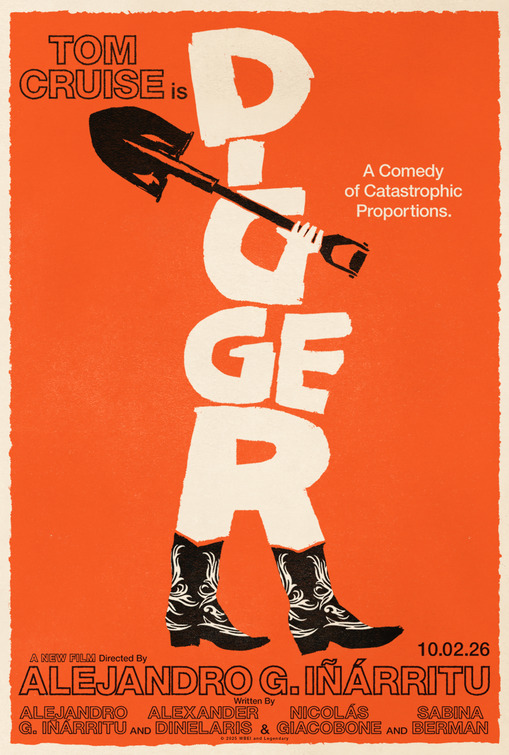
The most powerful person in the world doesn’t come from politics or even technology. He’s an oil tycoon, and his name is Digger Rockwell (Tom Cruise). Digger is boisterous, unsubtle, defensive, and ignorant on the things he wishes to be ignorant on. His company, Rockwell United, has colluded with President Compson (John Goodman) of the United States to drill for oil near Greenland and Alaska.
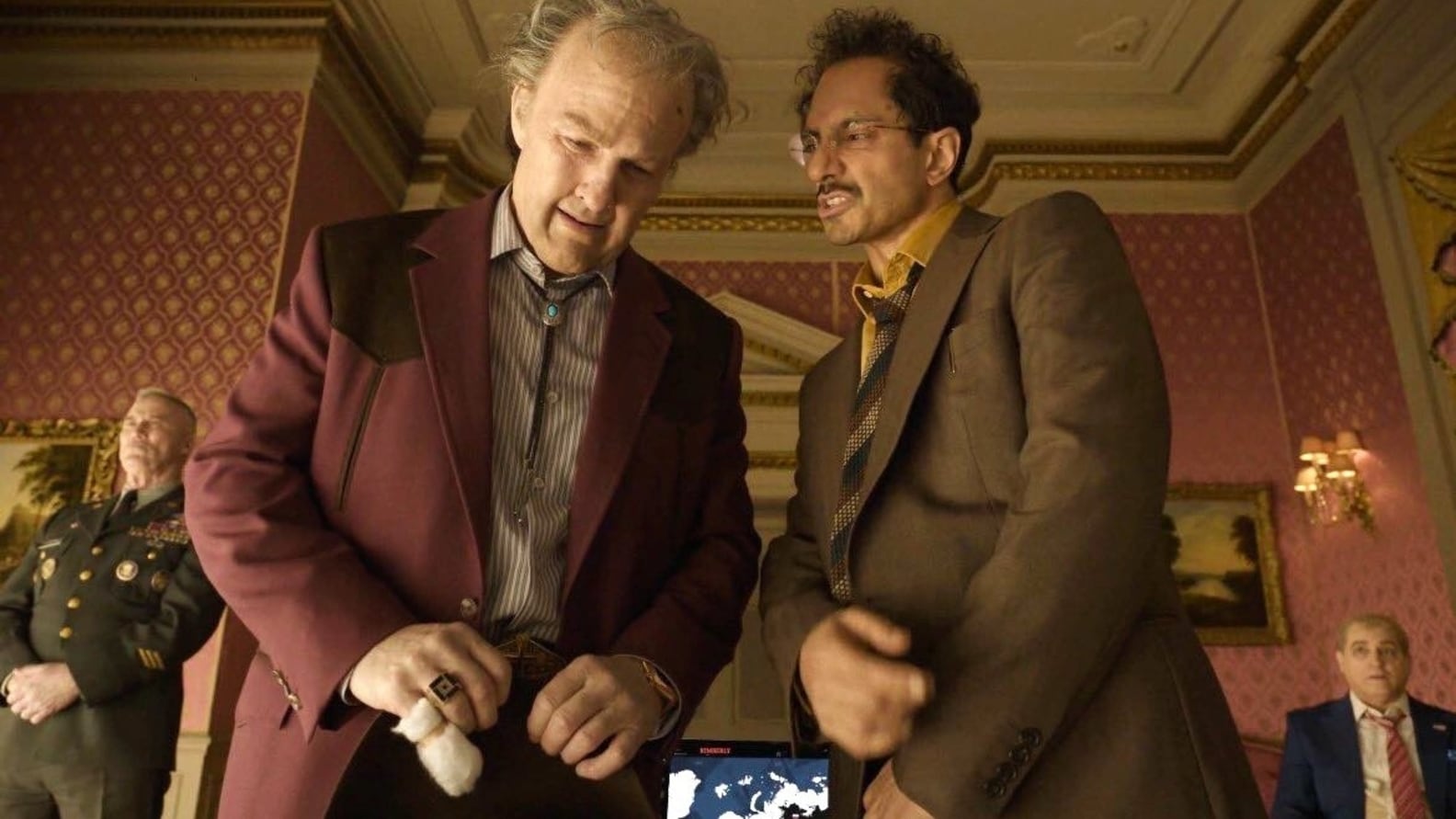
The repeated penetration creates an explosion that kills all of Rockwell’s employees stationed near the drill site, and triggers an ice shelf breaking off from a previously stable ice sheet. Models run by lead environmental safety chief Dr. Nirav Ganesh (Riz Ahmed) show a 99.9% likelihood that the shelf will crash right into Europe, creating unprecedented tsunamis displacing millions of natives. So over the next few days, Digger must reckon with his role in the impending catastrophe, and see if there’s a way to literally change the trajectory of it. Digger has dug the world into this fiasco, and if there’s anyone that can dig them out of it, it is damn sure him.
Where to begin with Digger, a film being described as highly divisive and even has Warner Bros leaning into the sentiment? Is it as bad as its deplorable opening weekend box office of $8 million against a rumored budget as high as $180 million? No. But does that make it a misunderstood movie that the detractors are completely wrong on? Not quite. Are there things this feature does well that I can see lasting the test of time, especially as this century continues? Yes. Am I conflicted about how I feel overall about the production? Absolutely.
In Digger, the movie marks director Alejandro González Iñárritu’s first English film since 2015’s The Revenant. While the trademark technical flourishes like the “unbroken” tracking shots are lesser in scope, Iñárritu and his oft-cinematographer partner Emmanuel Lubezki squeeze a select few in, paired alongside the preference for wide angle lenses. There’s a craftsmanship “within the craft” that could propel Digger to couple of nominations for those below the line Oscar awards (makeup, production design, costume design, etc.).

I think it’s a fool’s errand to really try and discuss Digger without spoilers, but because its marketing hides it so well, I’ll do my best to talk around it. Apologies in advance if the following sounds very vague. In Digger, there’s the Rockwell-focused narrative serving as the foundation for the movie’s ideas written by Iñárritu, Alexander Dinelaris Jr, Nicolás Giacobone, and Sabina Berman, and then, there’s a story above this which contextualizes what we’re seeing. The sleight occurs early into the feature, and pops up sporadically over the next two acts. Of the two convergent storylines, the most visible one is, unfortunately, more grating than galvanic. Largely because its satirical shots at corporatocracy and the continued reticence of male, white, and very senior citizens to move out of the spotlight, simply lack the humor to sustain the attention the script gives to this.
Where Digger earns kudos is in the final act, where Iñárritu and his writing team create a meaningful and dare I say, thought-provoking discussion on the power of storytelling, why we keep telling these types of stories, and who gets to embellish or exaggerate said stories. It’s by the end that I found Digger to, as the titular character says, hit us with the cold hard truth that doesn’t absolve anyone. By that aspect, it’s quite cynical, and yet, there’s glimmers of optimism that can be taken as a hopeful read on why this particular kind of art should subsist. I wish that we got more time in this part of the story than what’s in the movie.
For the first time since 2017’s American Made, Cruise is starring in a role that isn’t Ethan Hunt or Pete “Maverick” Mitchell. Under pounds of makeup and prosthetics, one of cinema’s iconic movie stars turns up the volume. Like the movie, his work largely isn’t subtle, but he is the trigger man for Digger’s strongest scenes. One taking place in an amphitheater surrounded by numerous extras sees him at his most magnetic, delivering a scathing diatribe in one take on what led to the climate disaster, and how he’s not the sole villain for it. He, Jesse Plemons, and Sophie Wilde are the only individuals in the movie who get to show some different speeds beyond being loud, dumb, and/or annoying. The script severely neuters any chance Goodman, Ahmed, Michael Stuhlbarg, and Sandra Hüller have to make a meaningful impact.

The main tagline for Digger has been “A comedy of catastrophic proportions.” That’s kind of accurate because the comedy here fails at a disastrous level. However, at the end of its runtime, Digger’s ambition and how well it holds a mirror to our world stabilizes the film in ways I couldn’t envision during the first two acts. Like its new ad campaign says, decide for yourself.
C
Photo credits go to impawards.com, people.com, IMDB.com, and variety.com.

