
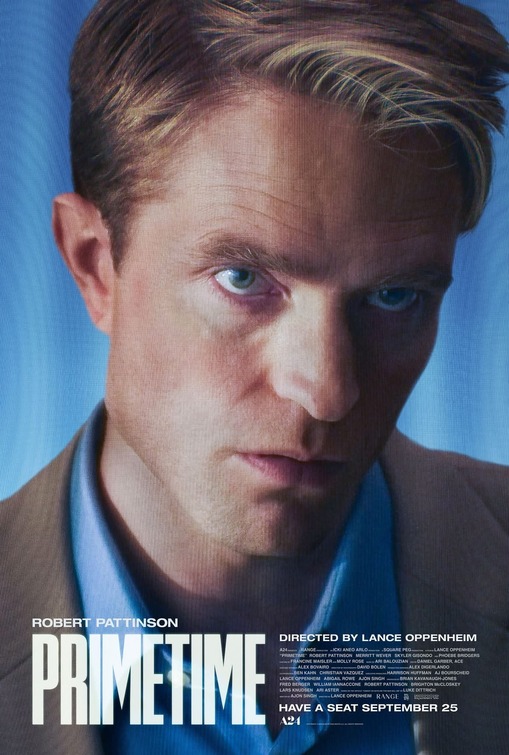
“Why don’t you have a seat right over there?” This is one of the core lines journalist Chris Hansen (Robert Pattinson) “from Dateline NBC” uses when he confronts and outs individuals in person who engage in back-and-forth online chats with minors on his show, Dateline. It’s 2006, and Hansen is the face of this seemingly noble-intentioned show as host, but in the background making the show hum and go off without a hitch are producer Andie (Merritt Wever), chatroom conversationalist Xavier (Matthew Maher), and many actors and actresses who can convincingly portray preteen and teenage children; one in particular, aspiring actor Dan Plumb (Skyler Gisondo) becomes a consistent stalwart of the production.
The show has caught ratings lightning in a bottle, and gets moved to a higher profile spot in evening Primetime competing directly against ABC’s hit show, Lost. And as the show continues to scale in viewership, Chris’ desire for it and himself to be legitimized grows to a manic degree, at the cost of his relationship with his spouse (Anna Faris) and his children. In entrapping these sexual predators, Chris maintains that they’re delivering justice and preventing your kid or your kid’s friend from being victims. But the real question is, does he truly believe this? Or has he convinced himself of this, using the show to push himself as the preeminent investigative journalist?

In 2026, the year in cinema has belonged to four performers: Tom Holland, Zendaya, Anne Hathaway, and Robert Pattinson. For Pattinson, he’s thrived this year in co-lead (The Drama) or strictly supporting efforts (The Odyssey, and the soon-to-be-released Dune: Part 3), but he’s front and center as the lead in Primetime. On the strength of his performance, smaller ones from castmates, and a stylized, nightmarish direction, Primetime, even with some puzzling narrative choices, is worth the price of admission.
This Pattinson performance is more of a showy one, and isn’t going to click for everyone. Through his eccentric mannerisms and off-center charisma, his interpretation of Hansen toes the line of caricature, but never crosses fully into being so. Pattinson’s work is strong because he’s essentially playing a man who has lost his grip of where Chris Hansen from Dateline NBC ends and where Chris Hansen, father figure and husband, begin, and within that, Pattinson highlights the complexity of the movie’s lead character. Is Hansen acting when he says the show exists for the right reasons to capture very bad people? Did he once believe in the goal of the show, or was he simply genius and opportunistic enough to know what audiences wanted to see?
If there’s one heart found within the story, it would be from Gisondo’s performance, as his character wrestles with the moral quandary of what the show does, his role within it, and whether his appearances can actually push his goals forward in becoming an actor. Both he and Pattinson turn in Oscar-level work, and I’d be remiss in not mentioning Weaver and Maher, each of whom can be looked at as Hansen’s most important people to the operation and both of whom, especially Wever (even when extended an olive branch to get off of the impending sinking ship), refuse to engage in the murkiness of their production.
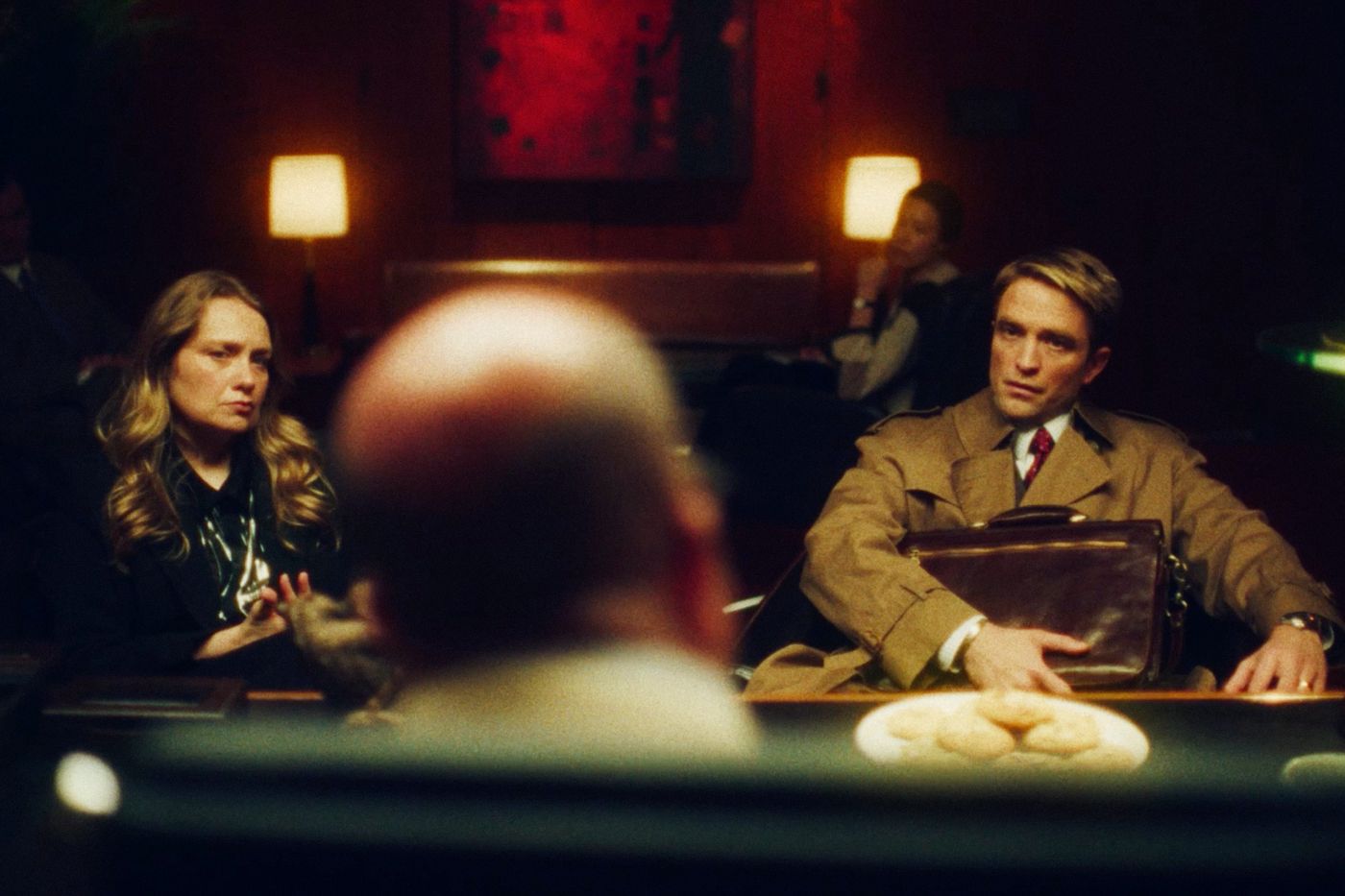
Primetime is director Lance Oppenheim’s first narrative feature after making his name this decade on documentaries. Visually, the film is anything but traditional-looking. His camerawork frames many of the participants up close with an intense focus on eyes, or sometimes underneath different angles. Nothing in the film ever overtly breaks the fourth wall, but implicitly, Oppenheim is in a way telling us that our voyeuristic appetites for trainwreck material are to blame.
Particularly in the second half, Primetime resembles a horror movie or a noir as Hansen chases his white whale in the infamous district attorney from Texas. The relentless downpour, the low-fi pre-HD quality fidelity, use of red, neon, and dark colors, as well as a legitimate plot thread that introduces a supernatural monster representing the evil Hansen believes it’s his duty to eradicate, moves the narrative into an obsessive descent into a figurative hell.
Watching the 2025 documentary Predators weeks before Primetime was helpful. It’s not the comprehensive story of To Catch a Predator or Chris Hansen’s life story, but it does assess the lasting impact of the show, and debates whether its host had a moral responsibility to uncover why its targets act the way they do. It’s a good companion piece to Primetime, but watching it also forces the viewer to watch this as a movie that takes some extensive liberties to fit its idea of what Hansen may have been like when the cameras weren’t rolling.
Adapted from an Esquire article, Oppenheim and writer Ajon Singh (also receiving his first credit on a full-length feature) have some difficulty in identifying what to keep in and what to expand on. The Hansen infidelity for example happened many years after the show ended, but here, it’s occurring as the show is growing, and the revelation of his cheating to the world and his wife just…happen. Overall, Primetime does an adequate enough job at showcasing the sensationalism and performative aspects of journalism, and how making yourself the story and star may accumulate eyeballs and clicks, but doesn’t make the journalistic story stick. That said, as the movie finds it hard to decide who or what to focus on, or even how to end, it ends up feeling lesser than when compared and analyzed against similar themed movies like Nightcrawler and Christine.
:max_bytes(150000):strip_icc():focal(703x541:705x543)/Skyler-Gisondo-Robert-Pattinson-Primetime2-92526-59d5d4d685bc4d38aeed7e79b2bbe994.jpg)
Hansen famously entrapped deviants on To Catch a Predator. In Primetime, Oppenheim entraps our attention. It is missing the sharpness in its script to solidify itself into the top tier of journalistic integrity films. But with its stellar ensemble performances performances and technical merits, it’s impossible to look away from.
B–
Photo credits go to impawards.com, vulture.com, people.com, and indiewire.com.


Great review, Jackson. You found more beneath the surface than I did, but we’re on the same page about Pattinson. He’s gloriously over the top here, I enjoyed the way he turns Hansen into this manic figure. The screenplay is a problem though. It never dug into this story with any depth. It recreated the spectacle but didn’t examine it. Still, Pattinson is having one hell of a year.
Appreciated Mark. Pattinson was awesome, and so too were Merritt Wever and Skyler Gisondo. I think there’s some hidden depth in the first half but do concede in the second half, while stylish, feels more style focused over any substance. Though it does make me intrigued to see what else Lance Oppenheim would do outside of documentaries, his visual eye could be great for horror features.