
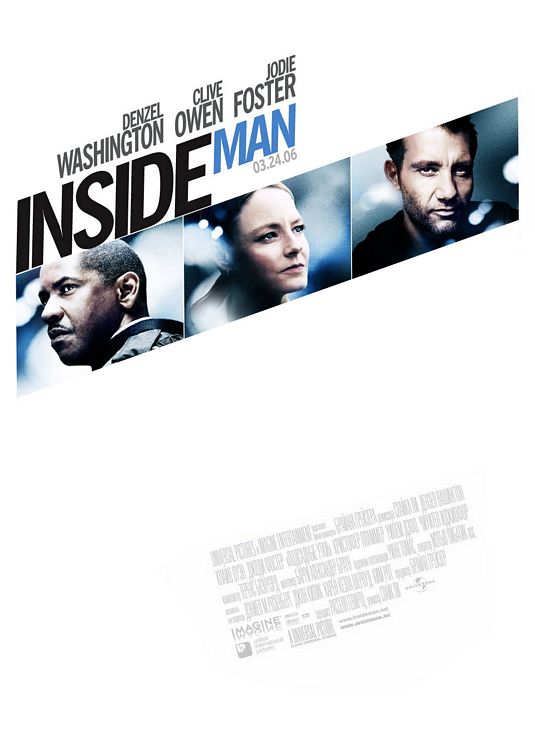
There is a starter pack of sorts when it comes to what you’re getting frequently without fail from a Spike Lee joint. The legendary director has made an impressive career of speaking truth to power, using a combination of the Black racial experience, along with the media portrayals of different groups, to do so. His works are unafraid of being incisive or anti-establishment, and you have to respect Lee for sticking to his guns so often.
But in March 2006, his Inside Man heist movie stood as his first truly commercial film, and 20 years later, it still serves as his most commercial feature. That’s not to say it’s devoid of any social commentary; he manages to squeeze in his thoughts on how powerful people attain and keep their status, as well as the depictions of African Americans in popular media and music, and how these harmful stereotypes can perpetuate through generations. It’s just that his usual inclinations feel secondary to the type of movie he wanted to make. Popular on first release and steadily growing in stature since, it’s a great time to highlight three reasons why it’s become more beloved:

3. SCORE & MUSIC: Inside Man’s opening credits begin with the Indian song “Chaiyya Chaiyya” playing across common streets and well-known locales of New York City. While it ultimately has no real significance to the movie’s plot (Spike simply loved the track), its inclusion makes the movie feel “universal,” alive, and diverse, as it sets viewers up in establishing this city block where the action is to take place as one where people of different colors, creeds, ethnicities, and demeanors will play a part in this story.
Composer Terence Blanchard is to Spike Lee as John Williams is to Steven Spielberg. The composer’s partnership runs decades with Lee. His score in Inside Man only has one motif heavily used, but he varies it across time signatures and instruments. Sometimes it manifests as a funky jazz, an ominous noir, or a contemplative meditation. Spike loved the motif so much that he actually reused it for the powerful ending scene of 2018’s BlacKkKlansman, which would net Blanchard his first Best Original Score nomination.

2. THE TECHNICAL: Any Spike movie is going to have his signature double dolly shot where characters look as if they’re being controlled by forces beyond their control, and in Inside Man, that moment comes about midway through when Detective Frazier (Denzel Washington) witnesses an act that he didn’t believe heist ringleader Dalton Russell (Clive Owen) was capable of. It’s the flashiest part of the movie, sure, but Spike’s movie profiles as more of a dual chamber piece than a large production, and it’s the editing from Barry Alexander Brown that does a lot of the heavy lifting to make it so.
For the bulk of the movie, we’re following the heist as it went down, but also figuring out by piecemeal through the flash forward interrogation scenes how it went down, who was a part of Dalton’s crew, and once the audience identifies who the crew members were, whether Detectives Frazier and Mitchell (Chiwetel Ejiofor) can put together the information necessary to apprehend the perpetrators. It’s an interesting choice for sure, and one when I first watched it, unsure if the choice removed too much tension as it’s clear nearly everyone survives. However, this narrative choice actually creates another cat-and-mouse situation that runs concurrently with the core cat-and-mouse going on between Russell and Frazier. The interrogation scenes reveal a lot, and some even hold some surprising levity. Washington and Ejiofor have such a strong chemistry, and it makes me wish that they’d do more features together.
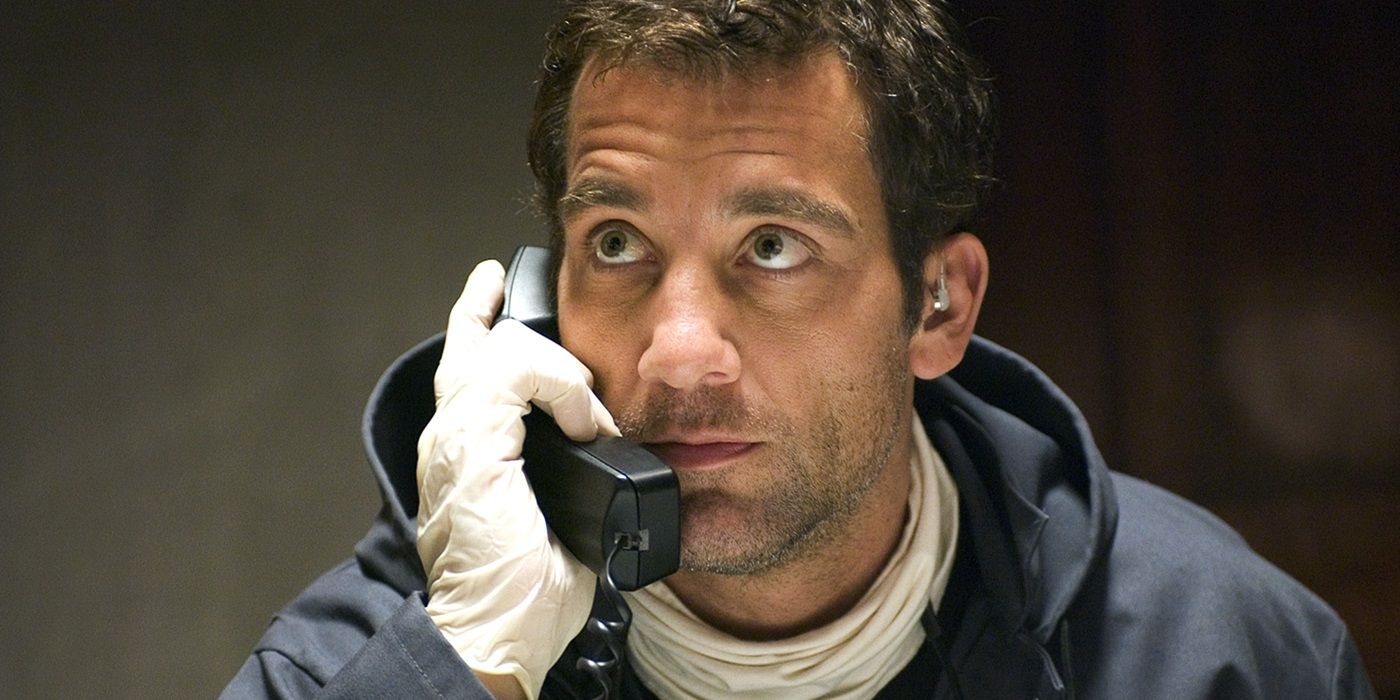
1. ENSEMBLE CAST: As many of Lee films have tended to have, Inside Man possesses a number of big names. In addition to the aforementioned Washington and Ejiofor, there’s Christopher Plummer as Arthur Case, the founder of the bank being robbed who has an item he does not want the world to know about, Jodie Foster (unflappable and subtly seductive here) playing Madeleine White, an amoral fixer who is employed by Case to retrieve the item at all costs, and Willem Dafoe, probably the most forgettable of the major names as police chief John Darius. He’s the one major character that lacks intrigue and isn’t given the dialogue to make himself pop, though his presence is appreciated.
Outside of the heavy name cast, a few of the smaller cast mates make impressions, from the eternal “that guy” Ken Leung distracted by what’s in front of him, Samantha Ivers, the woman playing the distraction, or the late James Ransone, bringing that livewire energy found in his season 2 character of Ziggy in The Wire.
Acknowledging all of that, Inside Man is Owen’s movie. Often behind a mask, his deliberate and aloof demeanor obscures a quiet intensity and a cutting charisma. The negotiations between he and Washington are arguably the best parts of the movie, with Detective Frazier trying so desperately to tease more info out of Russell only to be stonewalled, or worse, intentionally given a step by Russell only to lose two more steps later on. There’s never a moment where you don’t feel like he’s in complete control of the situation at hand, and the brief opening monologue is proof of such. It’s rare that Denzel gets completely upstaged, but I don’t think it’s an outlandish thing to say here.
Inside Man is currently streaming (as of this writing) on Netflix.
Photo credits go to impawards.com, IMDB.com, and tribecafilm.com.


Definitely Spike’s most commercial film, but as you note this movie still features his unique directorial style on full display. Tremendous, versatile cast, and yet Clive Owen definitely owns the screen every scene he is in. I am inspired to watch this again after reading your tribute here. A really solid heist thrill ride.
Clive’s character is one that sticks with you well many years after the movie. He’s not the most strongly written but the way he plays it is extremely memorable.