

When it came to action in the 1980’s, it was dominated by two individuals who worked so hard to be the quintessential action star of the decade. Sylvester Stallone versus Arnold Schwarzenegger. One (Stallone) had more range within his movies, and the other (Arnold) had a bit more raw charisma and a lighter demeanor. Couldn’t really go wrong with either, as even when their features weren’t that impressive in the moment and in retrospect, their star power was enough to make many of their works enjoyable.
In October 1985, Schwarzenegger had just come off of the career-making The Terminator a year earlier, and played a co-lead in Red Sonja. But with Commando, it functioned as the first time he was a leading man not placed in a sword-and-sandal world or sci-fi setting, but just as a regular guy in a very familiar world, or at least as regular as someone with a hulking stature could be. What makes Commando worth revisiting as it quickly approaches its 40 year anniversary? Let’s look at three reasons:
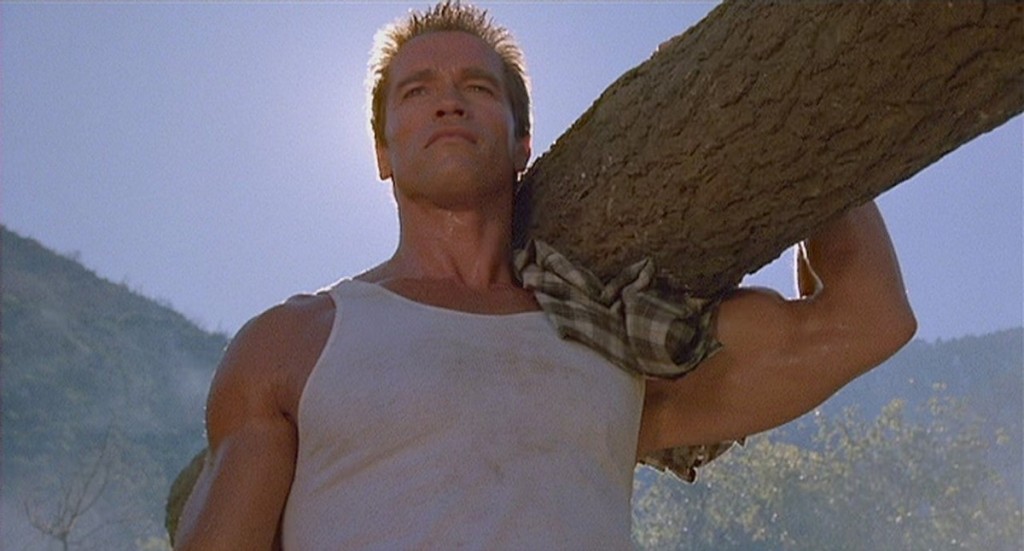
No frills setup: It doesn’t take long for Commando to establish the who, what, where, when, and how. The why is weaker, but for a movie like this, it’s definitely not paramount to its quality. Director Mark L. Lester quickly begins with a series of scenes where two bad guys lay waste to seemingly unassuming individuals. Not long after, it’s revealed by Major General Franklin Kirby (James Olson) to retired Colonel John Matrix (Schwarzenegger) that the deceased were part of his former unit, and there’s reason to believe they’re coming after Matrix and his daughter, Jenny (Alyssa Milano). The mercenaries descend onto John’s home in the California mountains and kidnap Jenny.
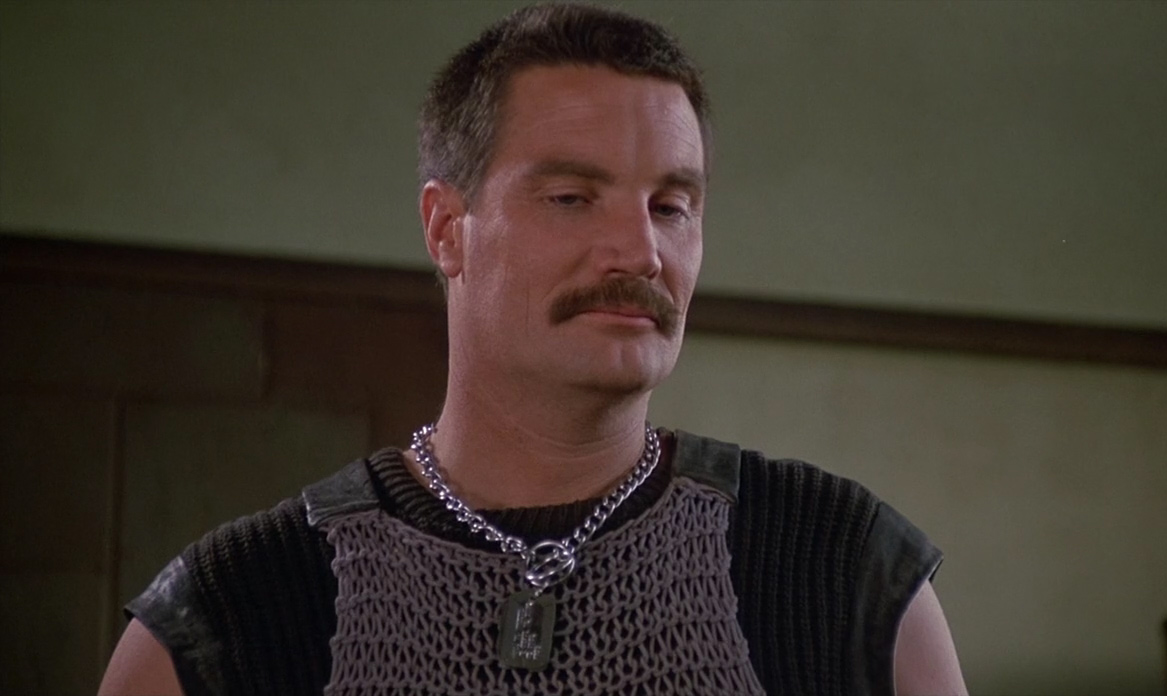
The mercenaries are led by Bennett (Vernon Wells), once a member of Matrix’s unit who was discharged for unnecessary violence and is now seeking revenge. Before that happens, he wants a pretty penny and the only way to ensure that is by making sure Matrix lives long enough to fulfill the wishes of Bennett’s employer, the dictator Arias (Dan Hedaya), who was eliminated from power by Matrix and his crew and is seeking to reestablish power by eliminating a rival. Agreeing to assist but knowing completion of the mission will result in the death of Jenny and himself, Matrix has 11 hours to save his beloved daughter by transforming into a one-man army. Lester and his writing team of Joseph Loeb III, Matthew Weisman, and Steven Edward de Souza make the motivations simple, the villains one-note, and refuse to include what would have been a forced romance, but their choices allow Commando to not overstay its welcome and shine in other ways.
Practical action: The 80’s didn’t really have a choice to be anything but practical. Still, it is amazing to go back and see what these action movies accomplished with much smaller budgets. The entire final 20-30 minutes on the island is a delightful experience, complete with endless explosions, lead-handed fisticuffs, and a near-relentless hail of bullets. Even as it is obviously exaggerated, there exists a welcome level of heft to the action that is harder to find today. It certainly doesn’t hurt either that Arnold performed many of his own stunts, in large part because many stunt doubles had nowhere near the large frame that he had. Arnold being front and center though in nearly every action moment means that Lester and cinematographer Matthew F. Leonetti didn’t have to worry about cutting around their megastar, which helps the look and flow of the movie immensely.
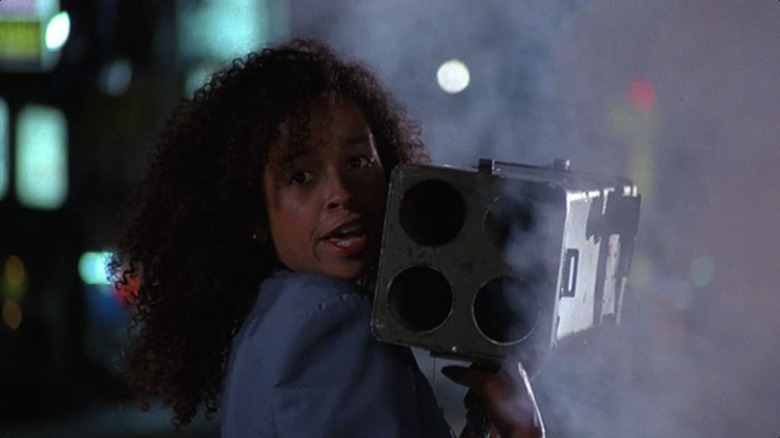
Humorous tone: In his career prime, what made Arnold great and more than just an action star was his affability, accentuated by a sense of humor that was present in many of his action films and allowed him to lead/co-lead comedies later in his career. And while Commando isn’t the most popular of Schwarzenegger’s features, there’s a real case to be made that it has the most effective one-liners collectively.
The dry delivery paired with the often-imitated but rarely duplicated accent still remains funny when Matrix is describing what happened to Cindy (Rae Dawn Chong) after his encounter with Sully, or when Matrix tells the flight attendant not to disturb his “friend” he just suffocated because he’s dead tired. In addition to these, there’s just an undercurrent of humor to the film both intentional and unintentional, like the entire set piece in the mall, or the entire character and existence of Wells’ Bennett, who was a last minute substitution. From the aesthetic to the physique and not forgetting the suggestive dialogue, all of this created discourse following the years and decades post-release theorizing that Bennett (and perhaps John too) are really attracted to each other. While never confirmed or denied, Wells’ character is one who has stood the test of time when thinking about memorable villains.
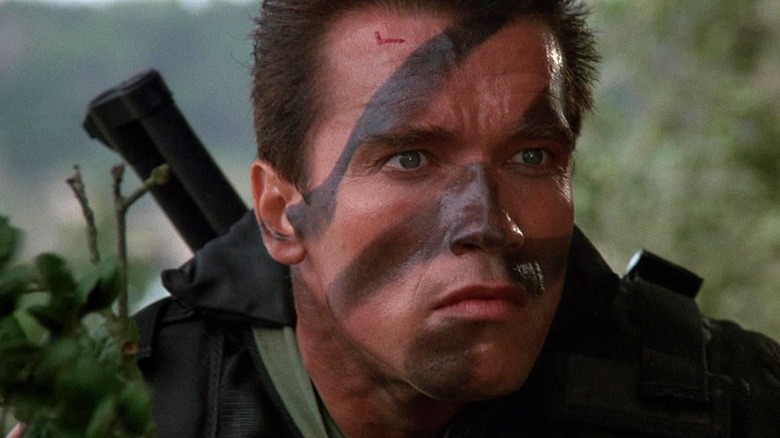
The tally: One of the first and finest one-man army movies, the legacy of Commando still exists today as one of Arnold’s best action vehicles and a sneaky funny comedy. It’s What to Watch.
Photo credits go to impawards.com, slashfilm.com, and rottentomatoes.com.
 MMJ
MMJ 