

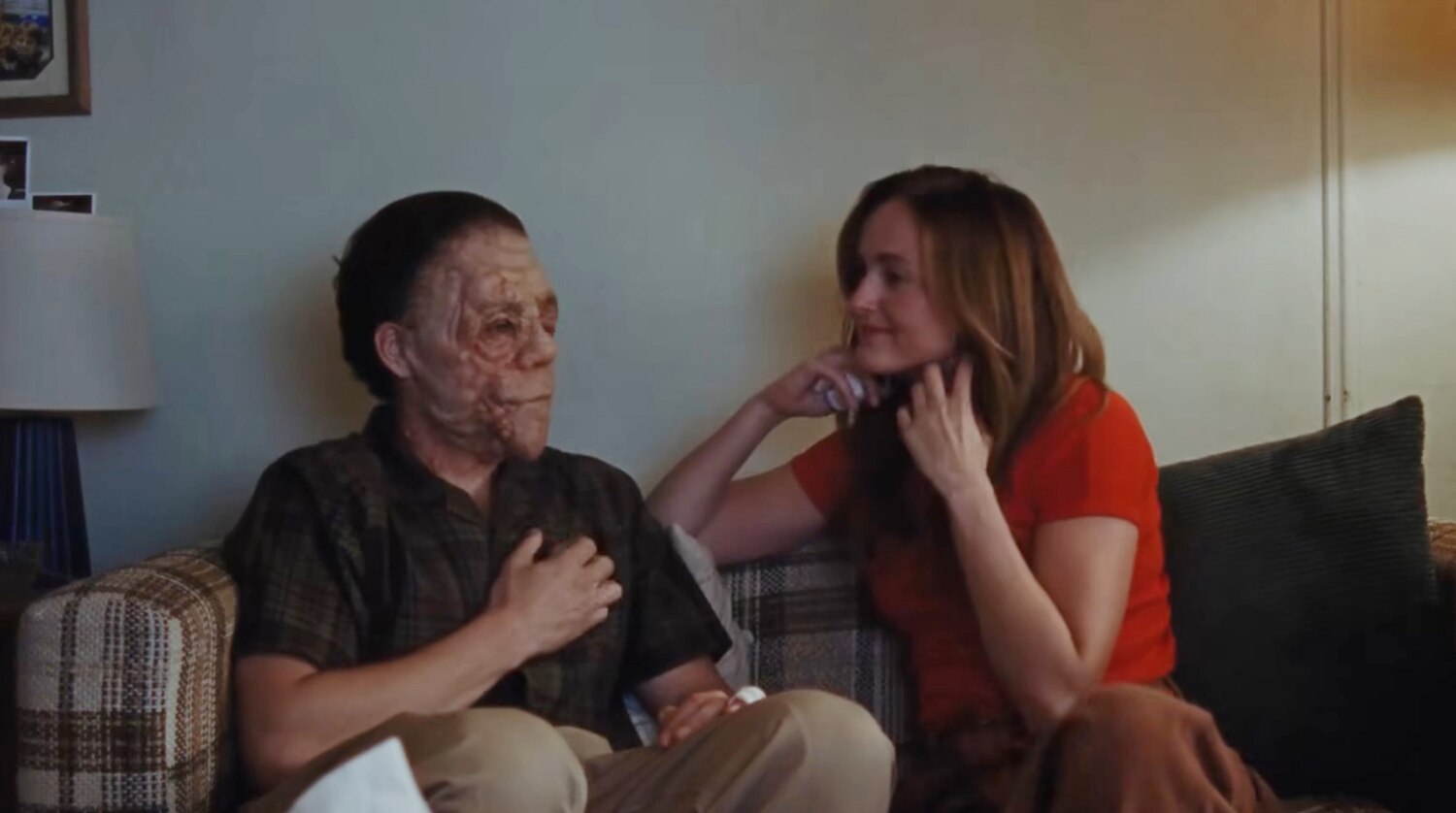
“Perhaps any potential risk is worth the potential reward?” That’s a question Edward’s (Sebastian Stan) doctor poses to him. All his life, Edward has been living with neurofibromatosis, a condition that has left his face looking less than human. As a result, the hopeful actor has struggled to find footing in his career. His personal life has long suffered too. It’s not necessarily shrieks or stares, but the invisibility most individuals greet him with. A new neighbor in his apartment complex, aspiring playwright Ingrid (Renate Reinsve) seems to see through the disfigurement. Their bond grows but never escalates to anything more than friends to the silent frustration of Edward.
Reticent but desperate, Edward decides to take the risk and undergo an experimental treatment to rid him of his ailment. After uncomfortable side effects, it shockingly works, and Edward gives way to “Guy.” Guy is everything Edward wasn’t: Handsomely visible. Life has turned for him, but his life is about to take another 180 when he finds Ingrid’s new off-Broadway play is casting for a character based off of his previous persona. He reads for it and Ingrid gifts him the part, unbeknownst to her that Guy used to be her neighbor. Ready for the bright stage lights, Edward prepares diligently and begins delivering creative input to Ingrid, but his best laid plans could become undone with the arrival of Oswald (Adam Pearson), an affable Brit with neurofibromatosis himself who has taken a deep interest in the production.
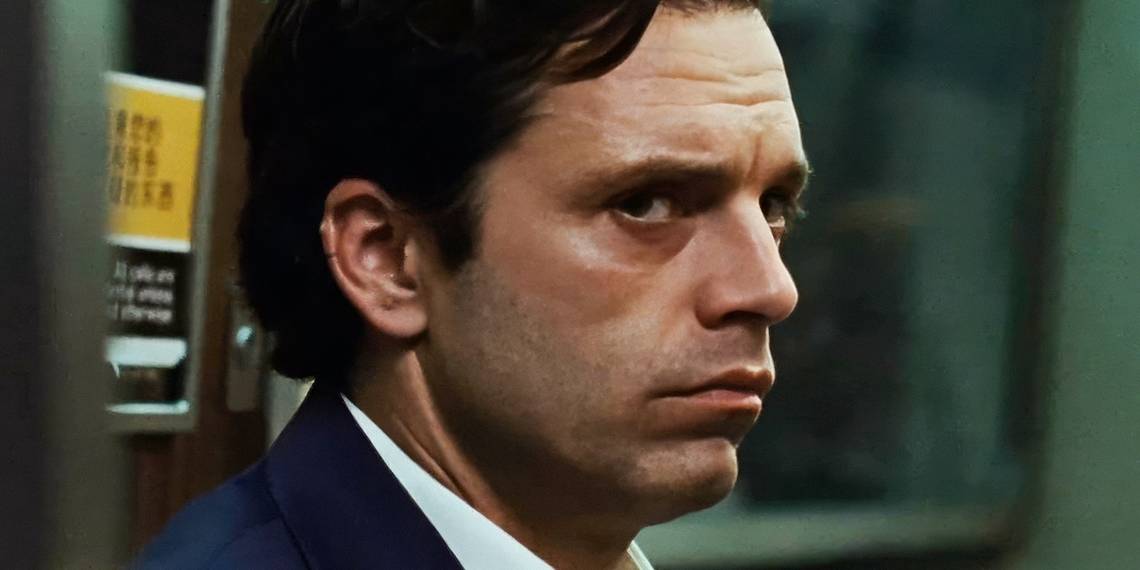
Even for the most introverted of the introverts (yours truly can be one of them), being seen, desired, and appreciated is still a basic human need. That need is at the core of A Different Man. Writer/director Aaron Schimberg has had a whole lifetime of dealing with facial disfigurement being born with a cleft palate, and all of his features to this point have examined the way characters with different disfigurements are forced to navigate society’s reactions to them.
Despite taking place in present day, the movie’s slight grain (filmed on 16-mm) gives it a heightened feeling of old-school absurdity, particularly when paired with Schimberg’s tendency behind the camera to favor quick zoom-ins as if to signal Edward/Guy’s disintegrating grip on reality. Composer Umberto Smerilli has put together one of the better themes and scores of 2024 (note: use more clarinets and oboes, composers!), jazz-based with a noir-like feel that conveys both acceptance and longing for something that may always be out of reach.
Albeit on a smaller in-movie industry scale and with less viscerality, A Different Man shares a similar thematic focus with this year’s The Substance. How our self-worth is impacted by what’s around us along with what successful people look like are solid yet surface-level throughlines that power Schimberg’s script. Its story is at its best in the second act where things turn more psychological and humorous, forcing Guy to confront if changing his countenance does nothing but merely amplify his deep-seated insecurities when juxtaposed with his essential doppelganger in Edward.
It’s also in the second act that Schimberg turns meta, using Ingrid’s playwriting story as a talking point for assessing what’s right and not right for representation of disabled/afflicted individuals in media. Is it more egregious for a normal person to portray someone disabled? Or is it in worse taste to cast real-life disabled individuals in the pursuit of something “real” at the expense of trivializing or even fetishizing plight? It’s only in the last 20 minutes where Schimberg’s climax and subsequent flimsy ending feels a tad disjointed from the rest of the film, marring a simple-but-robust screenplay to that point.
With all of that said, the shape of A Different Man allows Stan to showcase a wide range of modalities. Early on, he disappears in the prosthetics, and it’s easy to see how the approach in taking the makeup to the streets often before shooting paid great dividends. Later on, even as he’s the visual Sebastian Stan we all know and love, there’s no hint of suave charisma, only awkward uncertainty in how his character attempts to traverse his new appearance. Pearson and Reinsve give wonderful supporting turns too, the former bringing most of the levity and a fascinating disposition acting as the comparison point to Edward/Guy, and the latter a meatier than anticipated character who flits the needle between congeniality and opportunism.

Pensive and even playful, A Different Man certainly stands of one of the year’s most eccentric viewings, fully embracing its offbeat sensibilities and using a mostly measured approach to its story. You can change the face of a man, but you can’t change the man who had the face.
B
Photo credits go to impawards.com, empire-online.com, screenrant.com, and abcnews.go.com.
Feel free to follow me on Letterboxd.
 MMJ
MMJ 